How Automation is Changing Website Promotion

Remember when promoting a website meant manually posting on social media, sending individual emails, and constantly monitoring analytics dashboards? Those days are rapidly becoming ancient history. We're living in an era where automation has transformed website promotion from a labor-intensive grind into a streamlined, intelligent process.
The digital marketing landscape has undergone a massive transformation over the past decade. What once required teams of people working around the clock can now be accomplished by sophisticated automated systems that never sleep, never take breaks, and never miss an opportunity to engage with your audience. But here's the thing—automation isn't just about doing things faster. It's about doing them smarter, more precisely, and with a level of personalization that would be impossible to achieve manually.
Why does automation matter now more than ever? Simple. Your competitors are using it, your audience expects seamless experiences, and the sheer volume of data and channels available today makes manual management practically impossible. If you're still promoting your website the old-fashioned way, you're essentially bringing a knife to a gunfight.
Understanding Marketing Automation
So what exactly is marketing automation? At its core, it's the use of software and technology to automate repetitive marketing tasks, streamline workflows, and measure campaign effectiveness without constant human intervention. Think of it as having a tireless marketing assistant who works 24/7, never makes mistakes due to fatigue, and can handle thousands of tasks simultaneously.
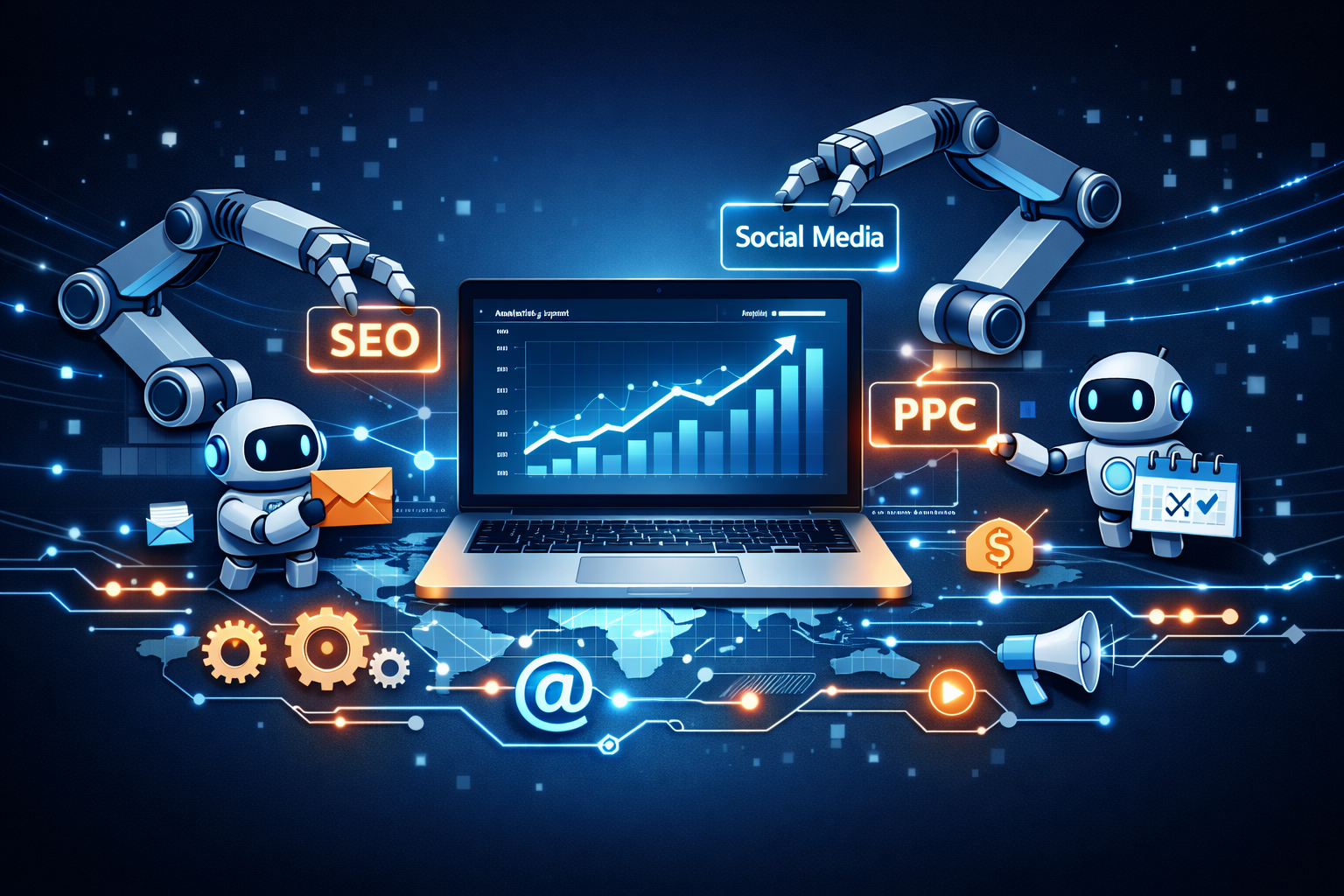
Marketing automation systems typically include several key components: customer relationship management (CRM) integration, email marketing platforms, social media management tools, analytics dashboards, and increasingly, artificial intelligence that learns from user behavior and optimizes campaigns in real-time. These components work together like a well-oiled machine, creating a promotional ecosystem that responds to user actions, predicts behaviors, and delivers the right message at precisely the right moment.
The Shift from Manual to Automated Promotion
Traditional website promotion was all about hustle. You'd manually craft social media posts, schedule them one by one, send broadcast emails to your entire list regardless of individual preferences, and spend hours analyzing spreadsheets to figure out what was working. It was time-consuming, prone to human error, and frankly, exhausting.
Automation has flipped this script entirely. Now, your promotional activities can run on autopilot while you focus on strategy and creative development. A visitor comes to your website, browses specific products, and leaves without purchasing? An automated system can trigger a personalized email sequence, retarget them with relevant ads across multiple platforms, and even adjust your website content when they return—all without you lifting a finger.
The transformation isn't just about convenience. It's about capability. Automation allows you to execute promotional strategies at a scale and with a precision that simply wasn't possible before. You can now segment your audience into hundreds of micro-groups and deliver tailored messages to each one simultaneously. That's not just efficiency—that's a fundamental change in what's possible.
Key Areas Where Automation is Making an Impact
Social Media Management
Social media has become the lifeblood of website promotion, but managing multiple platforms manually is like trying to juggle chainsaws while riding a unicycle. Automation tools have turned this circus act into a manageable workflow.
Scheduled posting is just the beginning. Modern automation platforms analyze when your audience is most active, suggest optimal posting times, and even rotate content to maximize reach. They can automatically resize images for different platforms, add platform-specific hashtags, and distribute a single piece of content across multiple channels with appropriate customization for each.
But here's where it gets really interesting—automated engagement. While you sleep, chatbots powered by AI can respond to comments, answer frequently asked questions, and even escalate complex issues to human team members. Your brand maintains a consistent presence and responsiveness that builds trust and engagement without requiring someone to monitor social media 24/7.
Email Marketing Campaigns
Email marketing has evolved from simple newsletters to sophisticated, behavior-driven communication systems. Automation has turned email from a broadcast medium into a conversation engine.
Personalized email sequences now adjust based on how recipients interact with previous messages. Did someone open your email but not click? The next message might emphasize different benefits. Did they click but not purchase? An automated workflow might send additional social proof, offer a limited-time discount, or provide more detailed information about the product they showed interest in.
Behavioral triggers are the secret sauce here. When someone abandons their shopping cart, downloads a resource, or celebrates a birthday, automated systems can send perfectly timed, relevant emails that feel personal and thoughtful. The best part? These sequences run continuously, nurturing thousands of leads simultaneously while you focus on other aspects of your business.
SEO and Content Optimization
Search engine optimization used to require hours of manual keyword research, competitor analysis, and performance tracking. Automation has transformed SEO from a tedious technical chore into a strategic advantage.
Automated keyword research tools now analyze search trends, identify opportunities your competitors are missing, and even suggest content topics based on what your audience is actively searching for. These systems can monitor your rankings across hundreds of keywords, alert you to significant changes, and provide actionable recommendations for improvement.
Content performance tracking has become incredibly sophisticated. Automated systems can analyze which pages are attracting traffic, where visitors are dropping off, and which content pieces are driving conversions. They can even suggest internal linking opportunities, identify duplicate content issues, and recommend technical SEO improvements—all without requiring you to be an SEO expert.
Pay-Per-Click Advertising
PPC advertising might be where automation shows its most dramatic impact. Managing bid strategies, ad placements, and budget allocation across multiple campaigns used to require constant attention and quick decision-making. Automation has turned this high-stress environment into a data-driven optimization machine.
Bid management automation uses machine learning algorithms to adjust bids in real-time based on countless variables—time of day, device type, user location, past conversion data, and more. These systems can make thousands of micro-adjustments daily, maximizing your return on ad spend in ways that would be impossible for humans to replicate.
Ad performance optimization goes even further. Automated systems test different ad variations, identify winning combinations, and continuously refine targeting parameters. They can automatically pause underperforming ads, scale successful campaigns, and even generate new ad copy based on what's resonating with your audience.
Benefits of Automation in Website Promotion
Time and Resource Efficiency
Let's talk about the elephant in the room—time. We all wish we had more of it, and automation is the closest thing we have to a time machine. Tasks that once consumed hours now happen in seconds. Campaign launches that required days of preparation can now be executed with a few clicks.
But it's not just about saving time—it's about reallocating human resources to where they matter most. When your team isn't bogged down with repetitive tasks like scheduling posts or compiling reports, they can focus on strategy, creativity, and building genuine relationships with your audience. Automation handles the mechanical work while humans do what they do best—think creatively and connect emotionally.
Round-the-clock operations are another game-changer. Your promotional activities don't stop when your team goes home. Automated systems continue engaging with audiences across different time zones, responding to inquiries, and optimizing campaigns while you sleep. It's like having a global team working tirelessly to promote your website without the overhead.
Data-Driven Decision Making
Here's a truth bomb—gut feelings and hunches are terrible foundations for marketing decisions. Automation brings data-driven decision making to the forefront, giving you real-time insights that were previously buried in spreadsheets or simply unavailable.
Real-time analytics and reporting mean you always know what's happening with your promotional efforts. You can see which channels are driving traffic, which campaigns are converting, and where you're wasting money—all updated continuously. No more waiting for end-of-month reports to discover that a campaign failed weeks ago.
Predictive insights take this even further. Modern automation platforms use historical data and machine learning to forecast trends, predict customer behavior, and recommend actions before problems arise. It's like having a crystal ball that actually works, giving you the ability to proactively adjust your strategy rather than constantly reacting to what's already happened.
Improved Personalization at Scale
We all know personalization works—people respond better to messages that feel tailored to them. The problem has always been scale. How do you personalize communications for thousands or millions of people without hiring an army of marketers?
Automation solves this paradox. Tailored user experiences can now be delivered to everyone based on their specific behaviors, preferences, and characteristics. Someone interested in product A sees different website content, receives different emails, and encounters different ads than someone interested in product B—all happening automatically.
Dynamic content delivery takes personalization to the next level. Your website, emails, and ads can automatically adjust based on who's viewing them. A returning customer might see different homepage content than a first-time visitor. Someone who's previously purchased might receive upsell recommendations while prospects get introductory offers. All of this happens seamlessly, creating the impression that your brand knows each individual personally.
Enhanced Customer Journey Mapping
Understanding the customer journey used to involve piecing together fragments of data from different sources, trying to reconstruct how people moved from awareness to purchase. Automation tracks every touchpoint automatically, creating a comprehensive map of how customers interact with your brand across all channels.
This visibility is powerful. You can see exactly where people are getting stuck, which touchpoints are most influential in driving conversions, and where opportunities exist to improve the experience. Automated systems can then optimize these conversion paths in real-time, testing different approaches and implementing what works best without manual intervention.
Popular Automation Tools Transforming Website Promotion
The automation landscape is crowded with options, each promising to revolutionize your promotional efforts. Marketing automation platforms like HubSpot, Marketo, and ActiveCampaign offer comprehensive solutions that integrate email marketing, social media management, CRM functionality, and analytics into unified systems. These platforms are the Swiss Army knives of website promotion—versatile, powerful, and designed for businesses of all sizes.
AI-powered analytics tools like Google Analytics 4, SEMrush, and Ahrefs have automated much of the data collection and analysis process. They provide insights that would require data scientists to extract manually, presented in dashboards that even non-technical marketers can understand and act upon.
Social media schedulers such as Buffer, Hootsuite, and Sprout Social have evolved from simple posting tools into sophisticated engagement platforms. They analyze optimal posting times, track brand mentions, manage conversations across platforms, and provide detailed performance metrics—all automated to minimize the time you spend on social media management.
Challenges and Limitations of Automation
The Human Touch Dilemma
Here's where things get tricky. Automation is incredibly powerful, but it can also feel cold and impersonal when overdone. Have you ever received an obviously automated email that got your name wrong or made assumptions about your interests that were completely off-base? That's the danger zone.
When automation feels impersonal, it can actually damage your brand rather than promote it. People crave authentic connections, and if every interaction feels robotic, you risk alienating the very audience you're trying to attract. The challenge is finding the sweet spot—using automation to handle the mechanics while preserving the human elements that make your brand relatable and trustworthy.
Balancing efficiency with authenticity requires thoughtful implementation. Automated messages should sound like they come from real people. Chatbots should know when to hand conversations over to humans. Email sequences should allow for personal responses. The goal isn't to replace human interaction entirely but to enhance it by freeing up time for the interactions that matter most.
Technical Barriers and Learning Curves
Let's be honest—automation isn't always easy to implement. The technology can be complex, integration challenges exist, and there's often a significant learning curve involved in mastering these platforms. Small businesses especially might feel overwhelmed by the technical requirements and upfront investment needed.
Implementation challenges range from choosing the right tools to configuring them properly for your specific needs. Many automation platforms offer extensive customization options, which is great for flexibility but can be daunting for beginners. Getting everything set up correctly often requires technical knowledge or hiring specialists, which adds to the cost and complexity.
Training requirements shouldn't be underestimated either. Your team needs to understand not just how to use the tools but also how to think strategically about automation. What should be automated? What should remain manual? How do you interpret the data these systems provide? These questions require a mindset shift that doesn't happen overnight.
Future Trends in Automated Website Promotion
The future of automated website promotion is both exciting and slightly intimidating. AI and machine learning advancements are making automation smarter every day. We're moving toward systems that don't just execute predefined workflows but actually learn from outcomes and adjust strategies autonomously. Imagine a promotional system that experiments with different approaches, learns what works for your specific audience, and continuously evolves without requiring constant human input.
Voice search optimization is another frontier where automation will play a crucial role. As more people use voice assistants to search and interact online, promotional strategies need to adapt. Automated systems are already beginning to optimize content for voice queries, adjust bidding strategies for voice search ads, and create conversational content that aligns with how people actually speak.
Predictive personalization will take customization to unprecedented levels. Rather than reacting to what users have already done, automated systems will predict what they're likely to do next and proactively deliver relevant content, offers, and experiences. It's the difference between responding to someone's actions and anticipating their needs before they even express them.
Best Practices for Implementing Automation
If you're ready to embrace automation for website promotion, start small and scale gradually. Don't try to automate everything at once. Begin with one area—perhaps email marketing or social media scheduling—master it, measure the results, and then expand to other areas. This approach minimizes risk and allows you to learn what works for your specific situation.
Maintain human oversight even as you automate more processes. Technology makes mistakes, algorithms can misinterpret data, and automated systems occasionally do unexpected things. Regular audits of your automated processes ensure they're performing as intended and allow you to make necessary adjustments before small issues become big problems.
Continuous testing and optimization should be built into your automation strategy from the beginning. Just because something is automated doesn't mean it's optimal. Use A/B testing to refine your automated emails, experiment with different social media posting schedules, and regularly review your automation rules to ensure they still align with your goals and audience preferences.
Conclusion
Automation has fundamentally changed website promotion from a manual, time-intensive process into a sophisticated, data-driven discipline that operates continuously at scale. The benefits—time savings, improved personalization, better decision-making, and increased efficiency—are too significant to ignore. Yet the challenges remind us that automation is a tool, not a replacement for strategic thinking and genuine human connection.
The businesses succeeding with automated website promotion aren't those using the most sophisticated tools or automating the most processes. They're the ones finding the right balance between technological efficiency and human authenticity, using automation to amplify their promotional efforts while maintaining the personal touch that builds lasting customer relationships.
As we look ahead, automation will only become more integral to website promotion. The question isn't whether to embrace it but how to do so in ways that align with your brand values, serve your audience effectively, and position your business for sustainable growth. The future belongs to those who can harness automation's power while never forgetting that behind every click, open, and conversion is a real person seeking genuine value and connection.